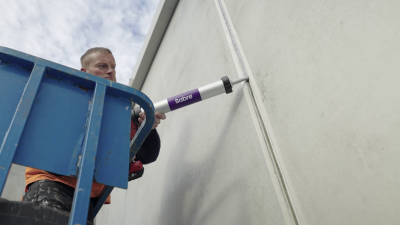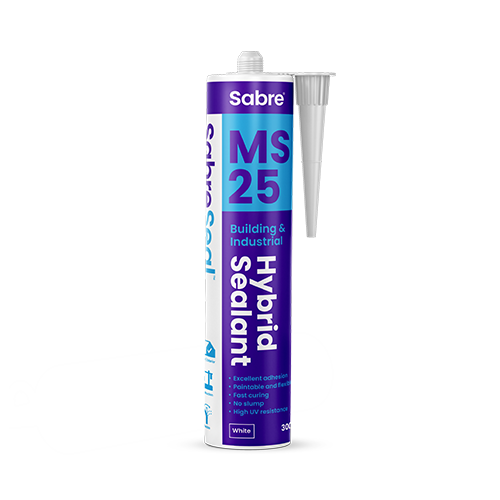
In the world of sealants and adhesives, the debate between MS (Modified Silane) Polymers and Silicone has gained traction as professionals look for materials that deliver better performance, safety, and versatility. While silicone has long been a go-to option, MS Polymers are increasingly becoming the preferred choice in many applications. Here’s why MS Polymers often outperform silicones—and why they might be the right choice for your next project.
The benefits of MS Polymer Technology
Superior adhesion to a wider range of substrates
MS Polymers exhibit excellent adhesion to a wide range of materials including metals, plastics, glass, wood, and even damp surfaces—without the need for primers in many cases. Silicone, while effective on smooth and non-porous materials like glass and ceramic, often requires primers or surface treatments to bond to porous or painted substrates.
Benefit: Faster, more flexible installation with fewer preparation steps.
Paintability and aesthetics
One of silicone’s major limitations is its poor compatibility with most paints. Even “paintable silicones” often show uneven results or peeling. MS Polymers, by contrast, are easily overpainted with most water-based paints once cured.
Benefit: Seamless integration into decorative finishes and colour-matched detailing.
No shrinkage or staining
Silicones can sometimes bleed oils, leading to staining of porous substrates like natural stone or concrete. They also may shrink slightly during curing. MS Polymers cure without releasing oils or solvents, ensuring zero staining and no shrinkage.
Benefit: Cleaner, long-lasting results—especially crucial in high-end architectural or façade work.
Eco-friendly and low VOC
MS Polymers are typically isocyanate-free, solvent-free, and have ultra-low VOC content, making them safer for both the installer and the environment. Many silicone products still contain components that release acetic acid or other VOCs during curing.
Benefit: Safer indoor use and compliance with green building standards.
Excellent UV and weather resistance
While silicones are known for their UV resistance, MS Polymers have closed the gap significantly, offering excellent weatherability and durability in harsh environments. They remain flexible and strong over time, even under prolonged exposure to sunlight and rain.
Benefit: Long service life with minimal maintenance in both interior and exterior applications.
Mechanical strength and flexibility
MS Polymers balance strength and flexibility, allowing them to absorb movement and vibration without cracking or breaking bond. Silicones, although flexible, can be prone to tearing under stress.
Benefit: Greater reliability in dynamic joints, such as expansion joints or vehicle assemblies.
Odourless and non-corrosive curing
Unlike acetic-cure silicones that emit a strong vinegar-like odour and can corrode metals, MS Polymers cure neutrally without releasing unpleasant smells or aggressive by-products.
Benefit: Ideal for sensitive environments like kitchens, bathrooms, and confined spaces.
The modern alternative to Silcone
While silicone remains a popular material in many applications, MS Polymer technology offers a host of advantages that make it more suitable for modern construction, manufacturing, and automotive industries. With superior adhesion, paintability, safety, and environmental performance, MS Polymers represent a new standard for high-performance sealing and bonding.
Whether you’re an architect, contractor, or manufacturer, switching to MS Polymers could streamline your processes and enhance the durability and appearance of your finished product.